
I will be writing over the coming weeks about the inter-relatedness of the physical body and the spiritual world and will be going over individual body part issues and what they might mean in the mental, emotional and spiritual realms.
First I feel it is important to highlight that everything effects everything. People often get too caught up in a particular symptomatic area (physically or not) and ignore the other areas that might be directly or indirectly influencing their problem.
As I’ve said in my “Learn Energy Healing” videos, whether you are a beginner or have many years of healing experience, working on all areas is often a better way of approaching things as you are less likely to miss something important that way.
In this article I will be speaking mostly of physical examples to get certain points across. Don’t worry, I’ll be expanding these points in future articles and videos to include the non-physical too.
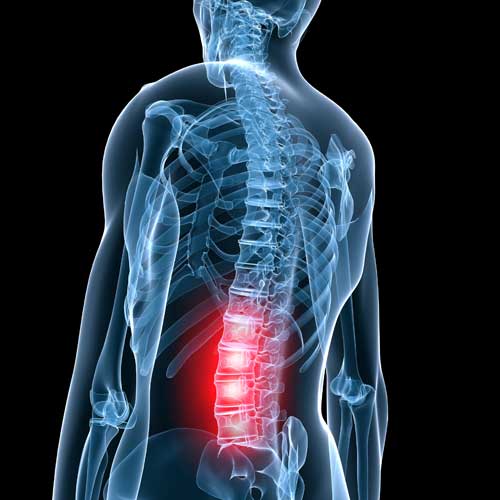
The body is a unit
I remember when learning to become an osteopath that there were a set of principles on which all osteopathy was based. Unlike most osteopathic courses in modern times and in most countries, I was taught both classical and more modern forms (what they often call “functional osteopathy”) of osteopathy so I’m not sure if those principles are as well known or taught as much these days.
Regardless, there was an important principle, the first principle, that simply stated “The body is a unit.”
Essentially this means that everything in the body is interrelated and so effects each other. Even distant or seemingly unrelated parts of the body have some impact on one another.
For example, while from most people’s points-of-view the foot might not seem to have anything much to do with how the spleen functions, a classical osteopath would certainly take the foot into account if there were spleen problems.
It could be that an external rotation at the ankle and pronation of the foot causes medial pressure on the knee making the knees come together, in turn making the thigh more internally rotated and adducted. Especially if this was on one side more than the other this could cause an imbalance in the pelvic bones such as an anteriorisation of the right innominate relative to the left as compensation to try and equal the functional leg length difference. This causes pressure in the sacro-iliac joints and there to be a compensatory side-bend in the lumbar spine and thus compensations all the way up the spine, potentially limiting full functionality of the nerve roots coming out of the thoracic spine that supply the spleen, and other organs affecting the spleen, not to mention physical asymmetric pressure on the other organs around and affecting the spleen due to cavity pressure changes.
That is only a brief glimpse into the complex relationships a foot misalignment can have on the spleen, and yes we could spend many hours talking about all the mechanics and interrelations that affect both areas if you really wanted to be detail oriented.
While this is a mechanical representation of everything affecting everything in the body the same goes for chemicals, nutrients, signalling molecules and body organs that all rely on each other. The heart for example relies on blood flow from the other blood vessels. It relies on the formation of blood and maintenance of the constituents of blood thus relies on the liver, spleen and kidneys for example. Also it relies on those nutrients getting to those organs and so the digestive systems, lymphatic system and the skeleton for picking up, biting, transporting and breaking down the food to be later made into blood constituents. Also the brain and nervous system to inform the body that it is hungry and to go find food. In turn those other organs also rely on the heart to pump blood around so that they too can do their jobs too otherwise they wouldn’t have to energy to do their jobs.
In the above examples, there is so much more that could influence the spleen or heart, including water, diet, sleep, posture, movement, emotional stresses, mental stresses, chemical stresses, spiritual stresses etc!
Much in the physical body is inter-related like this and of course outside forces also play a part. I will look at spiritual example in later articles.
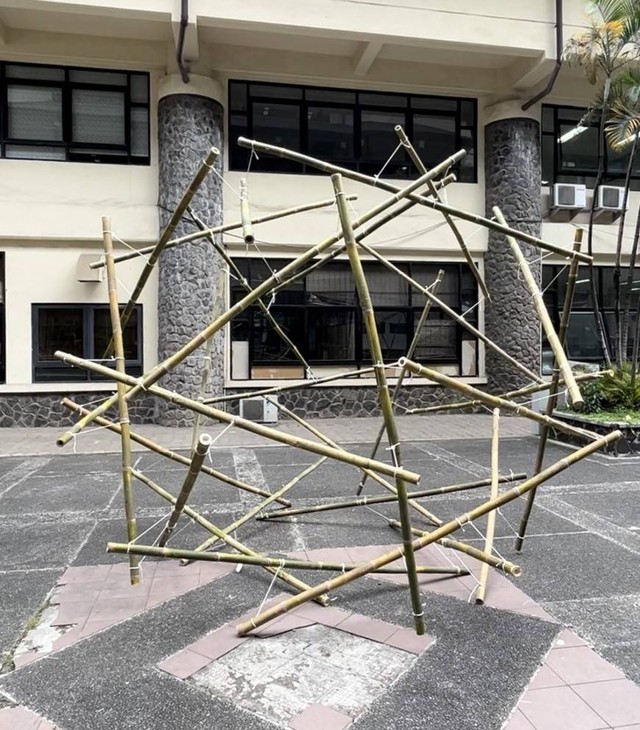
Tensegrity
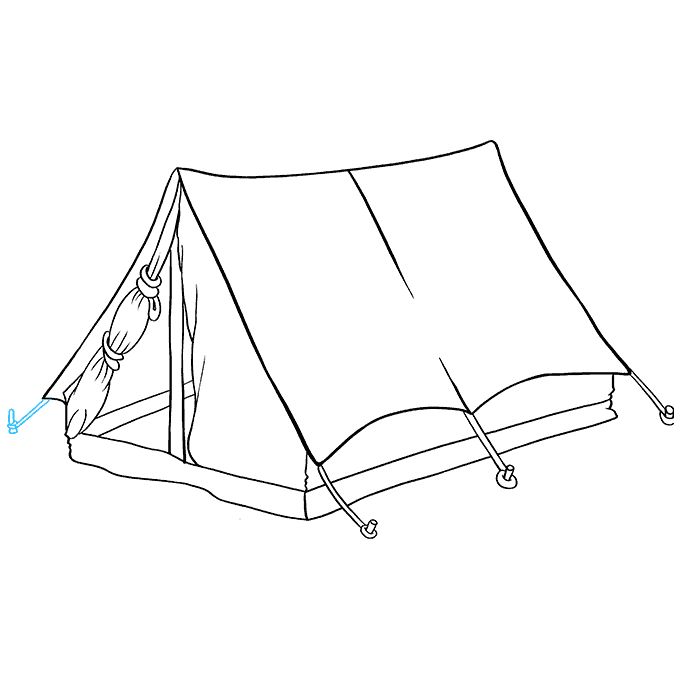
If my technical example was a bit too much to understand, think about a basic tent.
A tent is a very good example of what we call a tensegrous structure. In other words a tent is stronger than all the individual parts that make up the tent.
The tent poles, cords and fabrics each cannot stand up on their own, but when combined together, they form the tent, which can stand up.
All the parts of a tent affect each other if moved. If you move one of the tent poles, it will slacken one or more of the cords and also warp the shape of the fabric, with some sheets feeling taught in some directions and slack in others.
The same goes for if you were to misshapen one of the fabrics or pull or loosen one of the cords first – it will affect all the other structures of the tent in response.
Now if you think of the tent poles as bones, the cords as ligaments & tendons and the fabric as the fascia, skin and other connective tissues of the body, you might get a better idea of the example I gave above, and of how the physical body is also a tensegrous structure.
Compensation
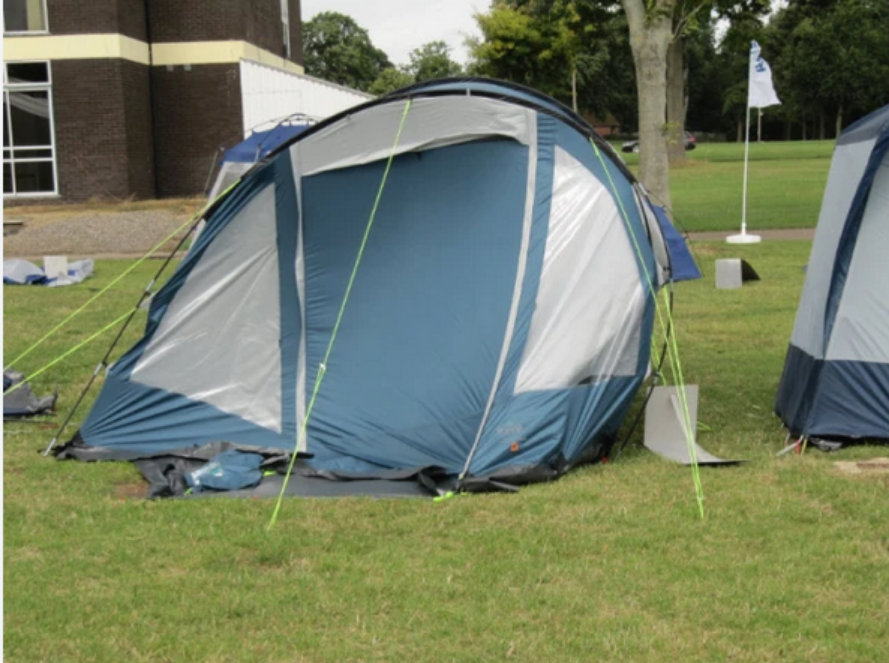
A tent also provides a wonderful example of compensation. If you move a tent pole slightly and thus cause asymetrical stress on the fabrics and cords, the tent won’t necessarily fall down straight away.
In other words the individual parts are still able to support each other and be strong enough to keep the tent up.
You might be able to also loosen a couple of cords, tighten others and cut or further warp more of the fabric, and the tent will still be able to stand up.
Usually it takes either a big shift in one part or many, many small alterations before the tent will finally fall.
This ability to still stay functional as a tent despite lots of alterations is due to compensation. i.e. the individual parts are able to compensate for the lack of perfect alignment.
If we again think of the poles as like bones, cords like tendons and ligaments and the fabrics as the different connective tissues of the body, we can appreciate that the physical body, though more complex than a tent, is a brilliant example of something that has a lot of compensatory ability.
Many of you will see examples in your own life such as asymmetiric use of you hands and arms at work, yet not causing any pains due to the compensatory ability of the body.
You may also have different leg lengths, a low nutrient diet, emotional stresses, an old scar from an appendix being taken out and many other examples that put different strains on the body but not necessarily any symptoms or obvious problems in the body. This is because the body is able to take the strain due to compensation.
The inability to compensate any longer
If your body is already taking a lot of different strains/stresses on, it might only take just one more to cause the body to be unable to compensate any longer.
It is at this point that an injury, symptom or dis-ease starts to become apparent.
The injury, symptom or dis-ease will first happen in the weakest part of the body – the part that can no longer compensate or if you like, the part that is unable to take the extra pressure that has been applied to it.
Apart from those that have developed an awareness of their bodies (such as via the Goenka style of vipassana), most people are unaware of most if not all of the contributing factors and thus blame the one, often small change, that tipped things over the edge into injury or dis-ease.
This could be having a knee injury and blaming stepping off a pavement awkwardly, rather than realising that poor foot-knee-pelvis alignment, lack of sleep, months of junk food and of course lack of attention in the moment, as some of many possible examples, were all contributing factors to that injury.
The same happens in the spiritual world. It is common for us healers to get someone coming to us complaining of an entity problem or of another person that harmed them energetically, and them be completely ignorant of their mind, way of thinking, beliefs of other people and the spiritual world, lack of spiritual practice, not paying attention to what they are asking of spirits and of course lack of looking after their physical vessel (via diet, sleep, rest, exercise, posture, chemical exposure etc) which reciprocally reflects into the spiritual world, and many other possible factors!
Of course there are situations where there really is only one factor at play such as a fit & healthy individual with very little need for compensation, getting hit by a truck and breaking bones, ligaments tendons and fascia all in one go. The majority of the time however there is more than one factor at play and it is important to look into if real solutions are desired.
Allopathic diagnoses and their problems
With the current way of thinking in our societies, all our focus will be on the painful/problematic area rather than all the other factors that contributed to the problem. A bit like saying “the problem is a broken tent pole” rather than acknowledging the fact that there has been asymmetric fabric and cord issues as well as other pole misalignents for quite some time before the one tent pole broke.
Many of you reading this will have already figured out that most of the established medicine out there is designed not to look at the whole picture and correct that to prevent/reduce further dis-ease or injury. Rather, they just to treat the symptoms or even worse, mask the symptoms, risk and create further complications and make a fair bit of money in the process!
I hope the understanding of this brief article helps you to appreciate the interrelatedness of the physical body and on how looking after all parts is a better way at solving problems and preventing future problems.
I will talk about the relationship to the mental, emotional & spiritual aspects more in the following articles.
